Leibniz-Handschriften zur Mathematik LH 35, 14, 2, fol. 160r
Machine transcription. Not an edition. Errors are expected: about 8% character error rate on Latin and French lines, higher on German. Mean line confidence on this page: 0.75.
Original at the GWLB · Page image · Annotations (IIIF) · Download text
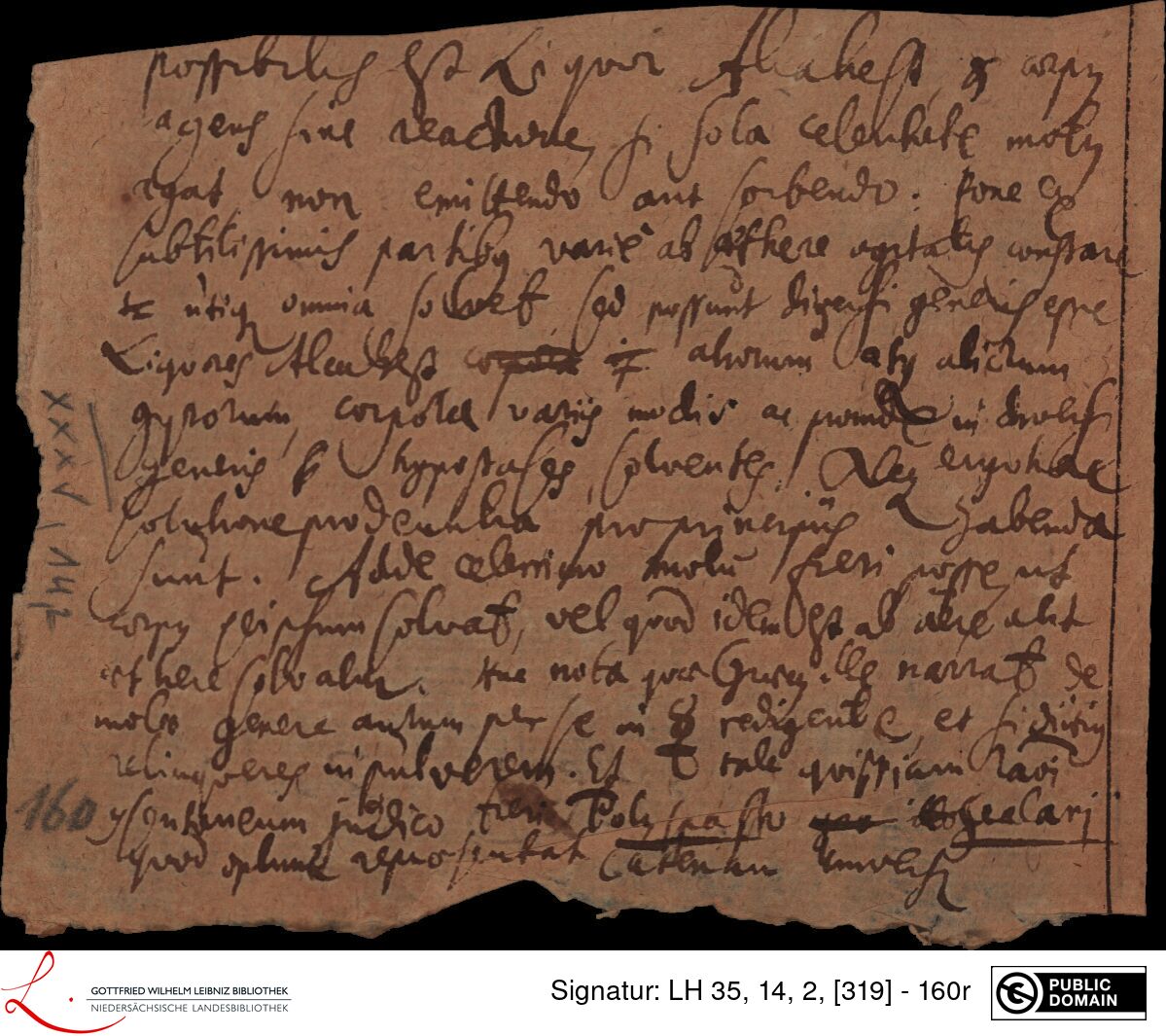
The machine reads it as
- possibilis est requor
- e
- cane
- A et corpri
- agens sine reactorle, si sola celentate mo
- e
- subtilissimus partibus varie ad serhere agitatis constare
- e utiqu omna soloe sed possunt diventi genem essie
- con
- aliorum satus aliclum
- gyptorum corpota variis modis ac promo in divere
- reneris hopostaseo solvente
- c
- ergonla
- solutione prodeuntia pro princine habenda
- sunt. Adde celerrimo imoru sieti posse ut
- orpus serpsum solvat, vel quod idtmdet ad aere alit
- ernere solvatuur. Huc nota quae graequ ile narra
- molae venere autum per se in _ redicenbe et
- A
- egat non emistendo aut sorbendo. Pone ej
- quais Mlcur
- ficitu
- relingveres inpulverem. Et C tar quistiam ravi
- isentoncum jurdico
- u
- e
- voluspasso naq doreala
- quod oplunt remraesentat
- edenau lnve
- a
Cite
Leibniz-Handschriften zur Mathematik LH 35, 14, 2, fol. 160r. Machine transcription, not an edition: Leibniz Legible (model FoNDUE-GD_v2_ft_Leibniz, run 74). https://leibnizlegible.com/page/00068202:0319?run=74