Leibniz-Handschriften zur Medizin LH 3, 2, fol. 30v
Machine transcription. Not an edition. Errors are expected: about 8% character error rate on Latin and French lines, higher on German. Mean line confidence on this page: 0.92.
Original at the GWLB · Page image · Annotations (IIIF) · Download text
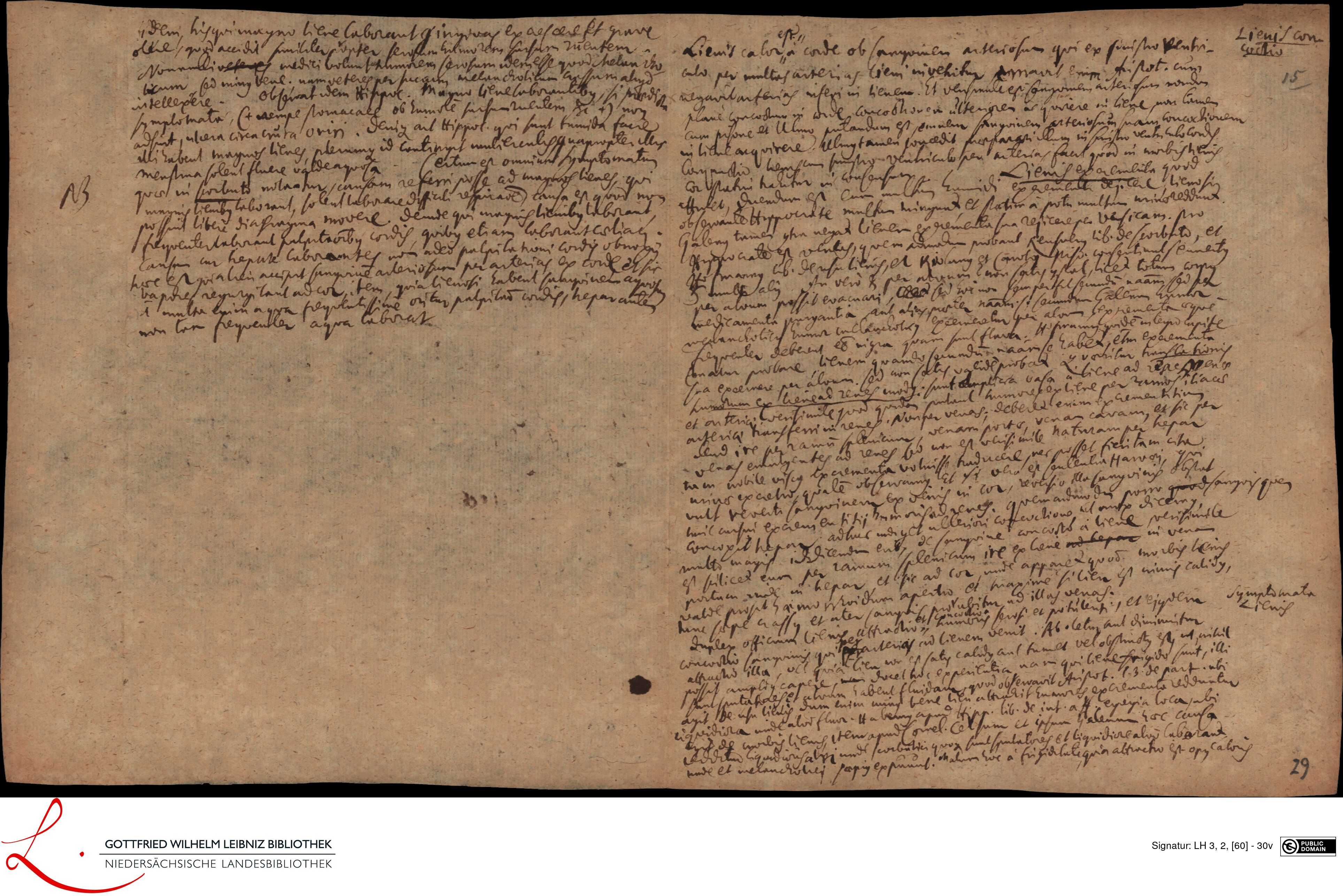
One image of two folio pages side by side, registered by the library under both labels (also fol. 29r); this page is its left half.
The machine reads it as
- idem, hisqui magno liere laborant 4ingovas ex aescere et grave
- olere, quod accidit similiter popter serotum hilmorem sursum ruentem.
- Nonnulliveteres medici bolunt hlmorem serosum idem esse quod Metancho
- licum sed minus bene. nam veteres per sucum melancholicum crassum aliu
- intellexere. Observat idem Hispoc. Magno lienetaborantibus, si praeo
- symplomata, (+ nempestomacace ob humore sursum ruentem dc 1) non
- adsunt, ulcera circacruta onri. Denique ait Hippot. qui sunt tumida facie
- illi habent magnos lienes plerumue id contingit mulierenlis anapropter illis
- menstrua solent fluere valde aquosa. Certum est omnium symplomatur
- quae in scorbuto notaatur causam referri posse ad magnios lienes qui
- magnis lienibus taborant, solent laborare difficili respiraione) causa est quod non
- possint libere diafiagna movere. Deinde qui magnis lienibus laborant
- frequenter taborant pataitioibus cordis, quibus etiam laborant caeliacu.
- Causam cur tepate laborantes non adeo palpilationi cordis obnoni
- sir
- bapores regurgitant adcor, item quiali enosi habent sunquiciem aquos
- sau
- a multa enim aqua frequentissime oritur palpilat cordis, rreparantem
- non tan frequenter aqua laborat
Cite
Leibniz-Handschriften zur Medizin LH 3, 2, fol. 30v. Machine transcription, not an edition: Leibniz Legible (model FoNDUE-GD_v2_ft_Leibniz, run 74). https://leibnizlegible.com/page/00068454:0060?run=74