The Questions Concerning Liberty, Necessity, And Chance, fol. 146
Machine transcription. Not an edition. Errors are expected: about 8% character error rate on Latin and French lines, higher on German. Mean line confidence on this page: 0.93.
Original at the GWLB · Page image · Annotations (IIIF) · Download text
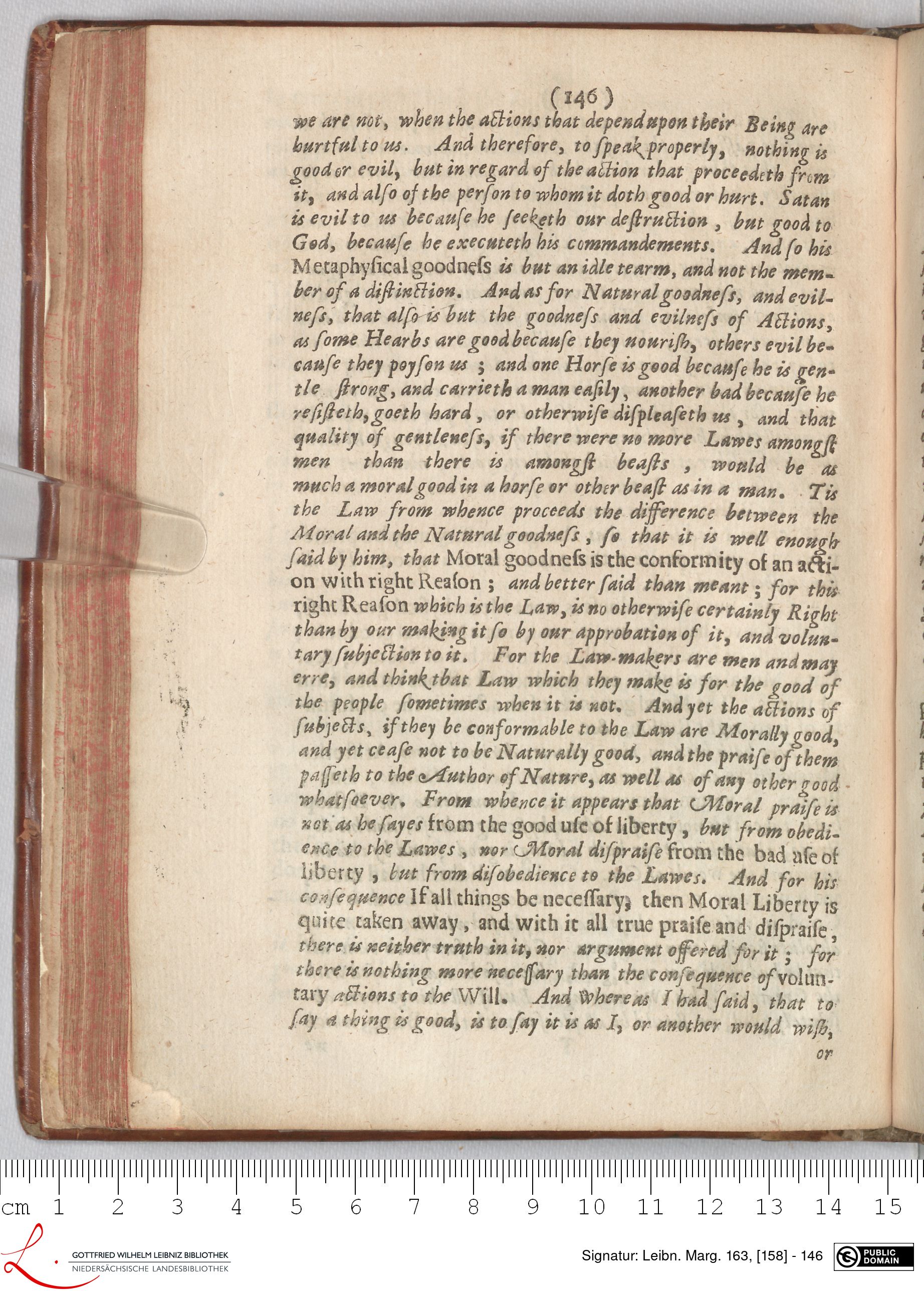
The machine reads it as
- (246
- ve are noi, nhenthe actions that dependupon their Beine are
- buritultons. And therefore; tospeate properly, nothine is
- coodor evil, but in recard of the action that proceedeth frem
- it and also ofthe per son to nhomit doth r00d or hurt. Satan
- is evil ro us because he secketh our destruction, but 500d t0
- G0d because he exccureth his commandements. And (0 hic
- Metaphrlical goodnels is but an idle rearm, and not the mem-
- berofa distinction. Andas for Natural coodness, and evil-
- ness, that also is but the coodness and evilness of Actions,
- as some Flearbs arc eo0d because tbey nourist, others evil be-
- cause they poysonus; and one Florse is 500d becanse heis cen-
- ele. Srone, and carrieth a mancasily, axother bad because he
- resisteth, coeth hard, or othermise displeasethus, and that
- quality of centleness, is there mere no more Larres amonese
- men ehan there is amonest bensts, montd be as
- mucha moral eood in ahorse or other beast as in a man. Tis
- ehe Lam from whence proceeds the difference bolmeen the
- Moral andehe Natural coodness, so that it is ell enoneh
- said by him, that Moral soodness is the contormiey ot an acti-
- on wichriehe Realon; andbetrer said than meant; for this
- righe Reason mhich isthe Lam, is no othernise cerrainty Riehe
- thanby our matine it so by our approbationof it, and volun-
- tary subjectionroit. For the Lam. maters are men and may
- erre, and thinte tbat Law Which they male is for the e00d of
- ibe people sometimes hen it is not. And pet thc actions of
- subjects, isthey be conformable rothe Lam are Morally g00d,
- and vet cease not to be Naturally 500d, andthe praise ofthem
- passeth tothe Author of Nature, as meil as of any orher r00d
- whatsoever. Prom rhence it appears that Moral praiseis
- not as hesayes trom che soodule oeliberes, bnt from obedi-
- ence tothe Lames, nor Moral dispraise trom the bad ale ol
- liberey, but from disobedience to ihe Laves. And for his
- consequonee IFall thines be necessarys chen Moral Liberey is
- quice catren avay, and wich ic all erue praise and dispraile.
- there is neither eruth inir, nor argument offered for it; for
- there is nothins more nece ary than the consequence of volu.
- carr actions eo theWVilI. And Whereas Thad said, that to
- Pay a thins is 500d, is to say it is as L, or another monld wis
Cite
The Questions Concerning Liberty, Necessity, And Chance, fol. 146. Machine transcription, not an edition: Leibniz Legible (model FoNDUE-GD_v2_ft_Leibniz, run 74). https://leibnizlegible.com/page/1030877386:0158?run=74